 Medicine Innovates Medicine Innovates: Delivering innovations in medicine to the world for better health and prosperity

Significance
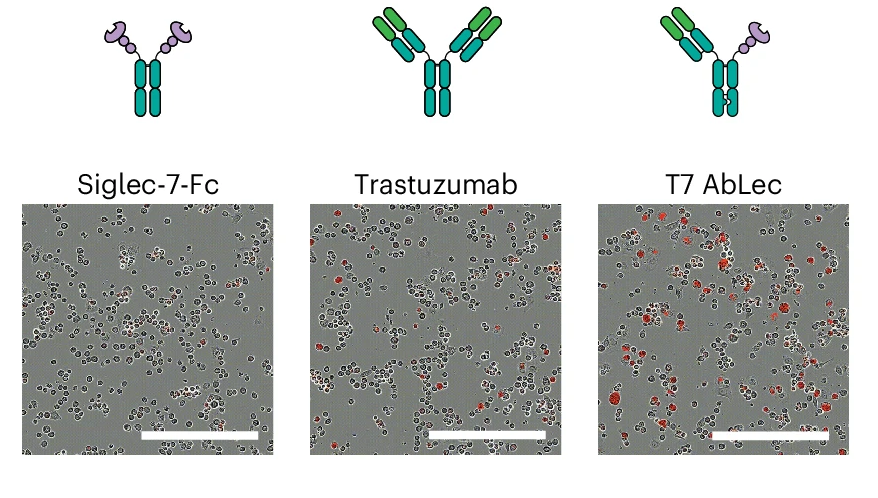
Immune checkpoint blockade has advanced modern oncology by demonstrating that durable tumor control can be achieved through reactivation of endogenous immune responses rather than direct cytotoxic intervention. Antibodies targeting protein-based inhibitory receptors such as PD-1, PD-L1, and CTLA-4 have validated this principle across multiple malignancies. Yet despite their transformative impact, these therapies benefit only a minority of patients, and resistance—whether intrinsic or acquired—remains a pervasive limitation. These clinical realities suggest that additional layers of immune regulation exist beyond canonical protein–protein checkpoints and that these layers may operate in parallel or independently to restrain antitumor immunity. One such regulatory dimension arises from the altered glycosylation landscapes characteristic of malignant cells. Aberrant glycan expression is a long-recognized hallmark of cancer, historically associated with tumor progression, metastasis, and poor prognosis. More recently, it has become evident that these glycans play an active immunological role by engaging lectin-type inhibitory receptors expressed on immune cells. Among these, sialic acid–binding immunoglobulin-like lectins (Siglecs) have emerged as central mediators of immune suppression. By recognizing tumor-associated sialoglycans, Siglecs transmit inhibitory signals that dampen phagocytosis, cytotoxicity, and inflammatory activation at the immune synapse. Despite growing appreciation of glyco-immune checkpoints as therapeutic targets, translating this concept into effective interventions has proven difficult. Glycans are weakly immunogenic, structurally heterogeneous, and often shared between malignant and healthy tissues, complicating antibody development. Decoy lectin receptors preserve native glycan specificity but bind too weakly to function as standalone therapeutics. Enzymatic strategies that degrade sialic acids or glycoproteins can relieve immune suppression but lack molecular precision and raise concerns regarding systemic toxicity. Collectively, these challenges have left a significant gap between mechanistic insight and therapeutic implementation. To this end, new research paper published in Nature Biotechnology and led by Professor Carolyn Bertozzi from Stanford University and Professor Jeffrey Ravetch from Rockefeller University, the ressearchers developed antibody–lectin chimeras (AbLecs), bispecific immunotherapeutics that couple tumor-targeting antibodies with glycan-binding lectin domains to block glyco-immune checkpoints locally at the immune synapse. This architecture enables low-affinity lectins to function at nanomolar potency by exploiting antibody-mediated spatial concentration. AbLecs selectively exclude inhibitory Siglec receptors from immune synapses, amplifying antibody effector functions without systemic glycan disruption.
The research team used Fc engineering strategies that promote controlled self-assembly, they generated stable heterotrimeric molecules combining clinically validated antibodies such as trastuzumab, rituximab, or cetuximab with extracellular domains of Siglec-7, Siglec-9, or related lectins. They performed biochemical characterization and confirmed correct assembly, thermal stability under physiological conditions, and preservation of antibody binding affinity despite the asymmetric architecture. They also performed functional binding studies which showed that although isolated lectin domains bind glycans only weakly, AbLecs exhibited nanomolar apparent affinity for tumor cells. This gain arose not from altered lectin specificity but from enforced proximity. High-affinity antibody binding concentrated the lectin domain at the tumor surface, enabling effective engagement of inhibitory glycans that would otherwise evade blockade. Mutational disruption of lectin binding sites reduced AbLec potency, confirming that glycan recognition remained functionally essential.
The authors investigated the technology across multiple immune effector systems and found in co-culture assays with primary human macrophages, AbLecs enhanced antibody-dependent phagocytosis compared with parent antibodies or combinations of antibodies and soluble lectin decoys. Similar enhancements were observed for natural killer cell–mediated cytotoxicity and granulocyte-driven killing, demonstrating that the effect was not restricted to a single immune lineage. Importantly, AbLecs were non-cytotoxic in isolation and required both antigen engagement and Fc receptor interactions, indicating that immune activation remained conditional and targeted. They also found that AbLec activity depended on disruption of Siglec–sialoglycan interactions. Blocking Siglec receptors or enzymatically removing sialic acids abolished the advantage conferred by AbLecs, placing glycan blockade at the center of their function. Imaging studies further revealed that AbLecs actively excluded inhibitory Siglecs from the immunological synapse, preventing their accumulation at sites of Fc receptor engagement. This spatial exclusion provides a direct explanation for the amplified immune signaling observed downstream. Moreover, the team conducted in vivo studies in humanized mouse models engineered to recapitulate human Siglec and Fc receptor biology and observed in a metastatic lung colonization model, AbLecs significantly reduced tumor burden compared with conventional antibody therapy. Notably, efficacy varied with the dominant Siglec ligand expressed by tumor cells, highlighting biological specificity rather than nonspecific immune activation. Across these experiments, AbLecs consistently outperformed combinations of antibodies with Siglec-blocking antibodies or enzymatic glycan degradation, underscoring the importance of architectural integration rather than additive pharmacology.
This work of Stanford University scientists establishes glyco-immune checkpoint blockade as a tractable and therapeutically actionable strategy, not by overcoming the biochemical limitations of glycan recognition, but by rethinking how and where such recognition occurs. The AbLec platform demonstrates that immune suppression mediated by tumor glycans is not an immutable feature of cancer biology but a vulnerability that can be selectively neutralized through molecular design. By anchoring low-affinity lectin domains to tumor-associated antigens, the authors convert an historically elusive target class into a precise and potent immunotherapeutic modality.
Moreover, immune checkpoints are often framed as discrete receptor–ligand pairs that can be blocked systemically. The new findings here argue instead that immune inhibition is spatially organized at the immunological synapse and that local signal integration may matter more than global receptor occupancy. AbLecs function not by saturating inhibitory receptors throughout the immune system, but by excluding them from the precise cellular interface where effector decisions are made. This finding helps explain why AbLecs outperform soluble decoy receptors and systemic Siglec-blocking antibodies, even when those agents nominally target the same molecular interactions. Furthermore, the modularity of the AbLec architecture is particularly consequential. The platform can be readily adapted to different tumor antigens, immune cell subsets, and lectin families, enabling rational customization for diverse malignancies. The demonstrated compatibility with established checkpoint inhibitors, including CD47 blockade, further positions AbLecs as complementary rather than competitive agents within existing immunotherapy regimens. Importantly, the ability to achieve synergy at lower doses raises the possibility of reducing immune-related toxicities that have limited the clinical success of several checkpoint strategies. We believe the study also reshapes how glycobiology is viewed in therapeutic design. Rather than treating glycans as diffuse or intractable features of cell biology, this work shows that their immunological effects can be intercepted with antibody-level precision. This reframing is likely to influence future efforts not only in oncology but also in inflammatory and autoimmune diseases where lectin–glycan interactions modulate immune thresholds.


Reference
Jessica Stark, Melissa Gray, Itziar Ibarlucea-Benitez, Marta Lustig, Annalise Bond, Brian Cho, Ishika Govil, Tran Luu, Megan Priestley, Tim Veth, Wesley Errington, Bence Bruncsics, Mikaela Ribi, Leo Williams, Casim Sarkar, Simon Wisnovsky, Nicholas M. Riley, Meghan Morrissey, Thomas Valerius, Jeffrey Ravetch, Carolyn Bertozzi. Antibody-lectin chimeras for glyco-immune checkpoint blockade. Nature Biotechnology, 2025; DOI: 10.1038/s41587-025-02884-6
Go to Journal of Nature Biotechnology.