 Medicine Innovates Medicine Innovates: Delivering innovations in medicine to the world for better health and prosperity

Significance
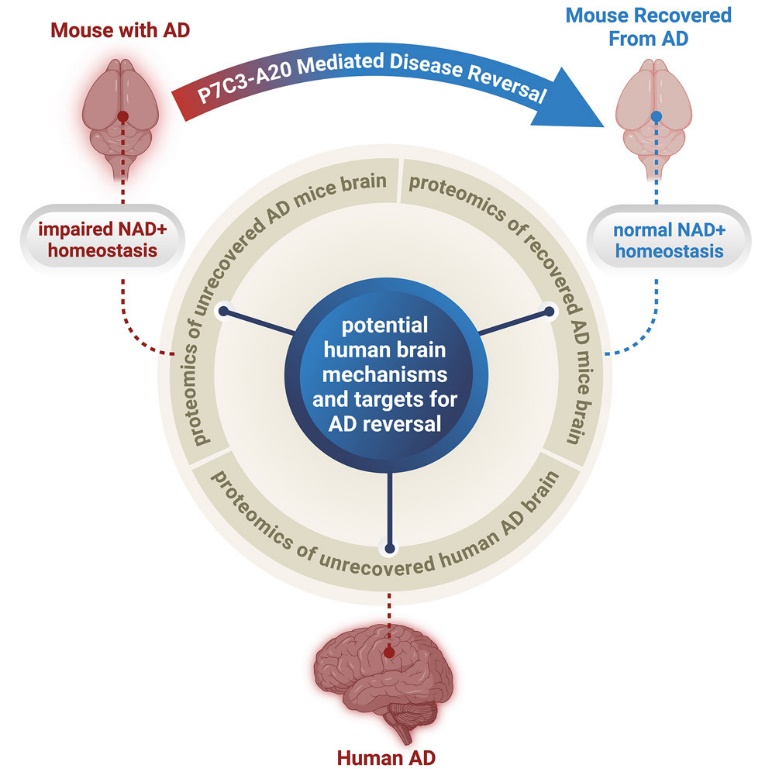
Alzheimer’s disease remains one of the most formidable challenges in modern medicine, not only because of its prevalence but because of the long-standing assumption that its clinical course is fundamentally irreversible. For more than a century, the prevailing framework has held that once cognitive symptoms emerge, the underlying neurodegenerative processes have progressed beyond meaningful repair. This view has shaped therapeutic development, directing most efforts toward slowing decline rather than restoring function. Despite enormous investment, disease-modifying strategies—particularly those focused narrowly on amyloid or tau—have yielded only modest clinical benefits, often at the cost of significant adverse effects. These limitations have prompted a reevaluation of whether dominant pathogenic targets fully capture the biology of Alzheimer’s disease. An underappreciated clue lies in the temporal disconnect between pathology and symptoms. Amyloid accumulation begins decades before clinical onset, and a subset of individuals harbor extensive neuropathology while remaining cognitively intact. Such observations suggest that neuronal loss alone does not dictate cognitive failure and that endogenous mechanisms of brain resilience may delay or counteract disease expression. Understanding what preserves this resilience, and why it eventually fails, has become a central question in the field. Cellular metabolic integrity has emerged as a candidate unifying factor. Nicotinamide adenine dinucleotide (NAD⁺) occupies a central position in neuronal health, coordinating redox balance, DNA repair, mitochondrial function, and inflammatory control. Disruption of NAD⁺ homeostasis has been reported in aging and neurodegeneration, yet prior approaches to restore NAD⁺—most commonly through precursor supplementation—raise concerns about supraphysiologic exposure and oncogenic risk. Moreover, whether impaired NAD⁺ regulation correlate of disease or a driver of irreversible decline has remained unresolved. To this end, new research paper published in Cell Reports Medicine and led by Professor Andrew Pieper from the Case Western Reserve University, the researchers developed a resilience-centered therapeutic strategy that restores physiological NAD⁺ homeostasis rather than targeting amyloid or tau directly. Using a small-molecule modulator, they demonstrated full cognitive and synaptic recovery in advanced amyloid- and tau-driven Alzheimer’s disease mouse models. They further established that disruption of NAD⁺ balance tightly correlates with disease severity in human brain tissue.
The research team used amyloid-driven 5xFAD mice, treatment with the neuroprotective compound P7C3-A20 was initiated after the onset of established pathology and cognitive impairment, directly testing the possibility of disease reversal rather than prevention. Parallel experiments in tau-driven PS19 mice extended this logic to a model dominated by neurofibrillary pathology. Across both systems, drug exposure was calibrated to restore physiological NAD⁺ balance without elevating total NAD⁺ beyond normal ranges. In aged 5xFAD mice, advanced disease was accompanied by a progressive collapse of brain NAD⁺ homeostasis that closely tracked cognitive decline. Pharmacologic normalization of this balance produced striking functional effects. Memory deficits in object recognition and spatial navigation were reversed, motor coordination improved, and synaptic plasticity within the hippocampus was restored. These behavioral recoveries were not superficial; electrophysiological measurements demonstrated normalization of long-term potentiation, indicating genuine recovery of circuit-level function.
The authors found at the cellular level, restoration of NAD⁺ homeostasis was associated with broad structural repair. Tau hyperphosphorylation was reduced despite unchanged amyloid production, suggesting enhanced clearance or reduced secondary toxicity rather than altered amyloidogenesis. Blood–brain barrier integrity, severely compromised in advanced disease, was reestablished, with recovery of tight junction proteins and pericyte coverage. Markers of oxidative stress and DNA damage declined sharply, paralleled by normalization of neuroinflammatory profiles and preservation of both mature neurons and newly generated hippocampal neurons. Moreover, they found these effects were not confined to amyloid pathology. In late-stage PS19 mice, treatment initiated near the end of life expectancy led to measurable cognitive recovery within weeks, accompanied by reduced tau pathology and restored vascular and metabolic markers. Moreover, the team analysed human brain tissue. In postmortem samples, disruption of NAD⁺ homeostasis correlated tightly with tau burden, oxidative damage, synaptic loss, and vascular deterioration. In contrast, brains from cognitively intact individuals with Alzheimer’s neuropathology displayed transcriptional signatures consistent with preserved NAD⁺ regulation. Multiomic integration further identified a conserved set of proteins dysregulated in both mouse and human Alzheimer’s disease that normalized with disease reversal in mice, revealing molecular nodes that may be exploitable in human therapy.
In conclusion, the work of Case Western Reserve University scientists identified conserved metabolic and proteomic nodes that open a realistic path toward reversing, rather than slowing, Alzheimer’s disease. They demonstrated that cognitive function can be fully restored in advanced disease challenges a core assumption that has guided both clinical expectations and regulatory benchmarks. Rather than asking how slowly decline can be delayed, the study invites the field to consider what biological states permit recovery. The study offers a unifying framework that integrates previously disparate pathogenic features by placing NAD⁺ homeostasis at the intersection of metabolism, inflammation, vascular integrity, and synaptic maintenance. Amyloid and tau remain relevant, but their toxicity appears conditional on a permissive metabolic environment. When that environment is corrected, downstream pathology loses its grip on function. This perspective helps reconcile why amyloid burden alone poorly predicts symptoms and why therapeutic removal of plaques often yields limited benefit. Clinically, we believe the findings suggest that therapeutic windows may extend far later into disease progression than previously believed. The recovery observed in terminal-stage tauopathy mice underscores that neuronal dysfunction, rather than irreversible loss, dominates much of the symptomatic phase. This has profound implications for trial design, patient selection, and outcome measures, particularly for interventions aimed at restoring cellular resilience rather than eliminating aggregates. Additionally, the new study distinguished homeostatic restoration from indiscriminate elevation, they provided a rational path forward that avoids known risks associated with chronic NAD⁺ excess. The identification of conserved molecular signatures shared between mouse reversal and human disease further strengthens the translational plausibility of this approach.

Reference
Kalyani Chaubey, Edwin Vázquez-Rosa, Sunil Jamuna Tripathi, Min-Kyoo Shin, Youngmin Yu, Matasha Dhar, Suwarna Chakraborty, Mai Yamakawa, Xinming Wang, Preethy S. Sridharan, Emiko Miller, Zea Bud, Sofia G. Corella, Sarah Barker, Salvatore G. Caradonna, Yeojung Koh, Kathryn Franke, Coral J. Cintrón-Pérez, Sophia Rose, Hua Fang, Adrian A. Cintrón-Pérez, Taylor Tomco, Xiongwei Zhu, Hisashi Fujioka, Tamar Gefen, Margaret E. Flanagan, Noelle S. Williams, Brigid M. Wilson, Lawrence Chen, Lijun Dou, Feixiong Cheng, Jessica E. Rexach, Jung-A Woo, David E. Kang, Bindu D. Paul, Andrew A. Pieper. Pharmacologic reversal of advanced Alzheimer’s disease in mice and identification of potential therapeutic nodes in human brain. Cell Reports Medicine, 2025; 102535 DOI: 10.1016/j.xcrm.2025.102535
Go to Journal of Cell Reports Medicine