 Medicine Innovates Medicine Innovates: Delivering innovations in medicine to the world for better health and prosperity

Significance
Swine influenza A virus can transmit and diversify even when herds receive routine vaccination, because antigenic drift and occasional reassortment keep pushing circulating viruses away from the exact strains chosen for production. That tension matters in pigs in a very practical way: porcine airways carry both avian- and human-type sialic acid receptors, and that receptor mix supports reassortment events that can generate new variants with altered infectivity and spread. Much of the vaccine logic in influenza still runs through hemagglutinin, and that emphasis makes sense if one assumes a close match between vaccine HA and the HA that arrives in the barn a few months later. The problem is that HA changes quickly enough that “match” can become a narrow target, and a narrow target leaves little room for the virus to move. Neuraminidase offers a different set of constraints and NA changes more slowly than HA, and its antigenic trajectory can diverge from HA’s, which means an immune response that tracks NA could keep some practical value even when HA moves on. The biology also helps explain why NA feels attractive as an antigen: its enzymatic role in cleaving sialic acid residues supports virion release and local spread, so antibodies that interfere with NA function can, in principle, limit amplification even when they don’t block entry.
There is a catch that keeps showing up across NA vaccine discussions. NA functions as a homotetramer, and that quaternary structure ties directly to catalytic activity and to the presentation of conformational epitopes. Once an expression strategy disrupts that assembly, the antigen can drift toward an “NA-like” protein that no longer behaves like NA in the immunological sense. That pushes vaccine design toward formats that actively enforce tetramerization and toward expression systems that preserve glycosylation patterns compatible with stable folding. A recent research paper published in the Journal Vaccines and conducted by graduate students Ao Zhang, Bin Tan, Jiahui Wang, and led by Professor Shuqin Zhang from the Institute of Special Animal and Plant Sciences at the Chinese Academy of Agricultural Sciences, the researchers developed a soluble tetrameric recombinant neuraminidase antigen derived from A/swine/Jilin/25/2008(H1N1) by fusing the NA ectodomain to a dedicated tetramerization domain plus a secretion signal and purification tag, then producing the protein in ExpiCHO-S cells. They formulated this rNA with Montanide ISA 201 VG to create a subunit vaccine and directly compared it with a commercial inactivated H1N1 swine influenza vaccine in pigs.
The research team first cloned the neuraminidase ectodomain from A/swine/Jilin/25/2008(H1N1) into a mammalian expression plasmid and fused the construct to a secretion signal, a His-tag, and a tetrabranchion tetramerization domain designed to enforce tetramer assembly. The investigators transiently transfected ExpiCHO-S cells, purified the secreted protein by Ni-affinity chromatography, and tracked the product by SDS-PAGE and immunoblotting under reducing and non-reducing conditions. Under non-reducing conditions, the band migrated near the expected tetramer mass, and the reducing gel returned a single band in the 60–70 kDa range, a pattern that matched the intended oligomeric shift. The authors treated the protein with PNGase F and recorded a downward shift in apparent molecular weight, which supported extensive N-linked glycosylation in the CHO-produced antigen. The study team then measured neuraminidase activity with a fluorescence-based assay and obtained a signal consistent with correct folding and retained catalytic function, a useful proxy because NA activity collapses quickly when the tetramer loses structural integrity.
The investigators formulated the recombinant tetrameric NA with Montanide ISA 201 VG and immunized 6-week-old pigs by intramuscular injection, using a prime–boost schedule with a 14-day interval; the commercial inactivated vaccine group followed the manufacturer’s protocol without a booster, and a PBS group provided the negative control. The researchers collected sera over time and quantified both NA-binding IgG and whole-virus binding IgG by ELISA. The rNA-ISA 201 VG group produced strong NA-specific IgG titres, with titres increasing over the sampling period, while the commercial vaccine generated only weak NA-specific responses across the same window. At the same time, the authors measured virus-binding IgG in both vaccinated groups and observed substantial titres in each group, without a persistent separation across most time points, which fits a simple idea: the inactivated vaccine can drive strong viral binding through HA-focused immunity, and the rNA formulation can still recruit broader viral binding alongside NA specificity. After the boost interval, the research team challenged pigs intranasally with homologous A/swine/Jilin/25/2008(H1N1) and monitored clinical signs, rectal temperature, body weight, and nasal shedding. The investigators isolated virus from daily nasal swabs in MDCK cells and quantified hemagglutination titres. Both vaccine groups showed shortened shedding windows compared with PBS controls, and the rNA-ISA 201 VG group generally stopped yielding isolatable virus earlier than the PBS group in the days following peak detection. The authors euthanized one pig per group on day 5 post-challenge and quantified viral RNA in trachea, lung, and hilar lymph node tissues by qPCR; the study team detected viral signal in PBS respiratory tissues and reported markedly lower viral loads in vaccinated animals, while the commercial vaccine produced lower tracheal viral load than the rNA vaccine in that single-animal comparison.
If we accept that influenza control in pigs needs something sturdier than a narrow HA match, then NA-focused immunogens start to look less like a “second antigen” and more like an alternate logic for slowing viral spread. The work of Professor Shuqin Zhang and colleagues is significant because it treats NA’s assembly state as a hard engineering constraint, not a detail to sort out later and by enforcing tetramerization and verifying enzymatic activity, the authors link a structural design choice to an immunological consequence: correct quaternary structure preserves catalytic function and likely preserves conformational epitopes that antibodies recognize, which in turn shapes the quality of the NA-specific response that vaccination can generate.
The comparison against a commercial inactivated vaccine adds a second conceptual point that feels easy to miss if one only reads titres. The inactivated product drove strong virus-binding antibodies while giving very weak NA-specific IgG, whereas the rNA formulation produced high NA-specific titres while still generating substantial virus-binding antibodies. That divergence implies that “viral binding” does not automatically tell you which surface antigen the immune system actually targeted. In practical terms, it means NA immunity can remain absent in conventional formulations even when the serology looks impressive, and that absence could matter when HA drifts away from the vaccine seed.
The authors observed reduced clinical signs, reduced nasal shedding duration, and reduced viral loads in respiratory tissues after homologous challenge in vaccinated groups, and histopathology on day 5 post-challenge showed severe lung and airway damage in PBS controls with far milder changes in vaccinated pigs. Those outcomes support a restrained interpretation: NA-directed immunity can contribute to meaningful protection in the natural host, at least under homologous challenge conditions and within the limits of the sampling design. The same dataset also highlights the places where the biology refuses to simplify. Residual virus isolation from nasal swabs after challenge argues against complete sterilizing protection, and the tracheal viral-load comparison suggests that antigen choice and formulation can shift where clearance improves most. That observation ties back to mechanism: HA-focused neutralization might impact early infection dynamics in the upper airway, while NA-focused antibodies might compress spread and release kinetics in a way that shows up differently across tissues. The study called for larger cohorts and broader testing, including dose, adjuvant, route, and heterologous challenge and if future work confirms that a tetramer-stabilized NA can drive robust NA-specific immunity in pigs without sacrificing broader viral binding, then swine vaccine design may gain a practical lever to reduce mismatch sensitivity across evolving strains, though the scale of that benefit will depend on how broadly NA immunity carries across lineages.
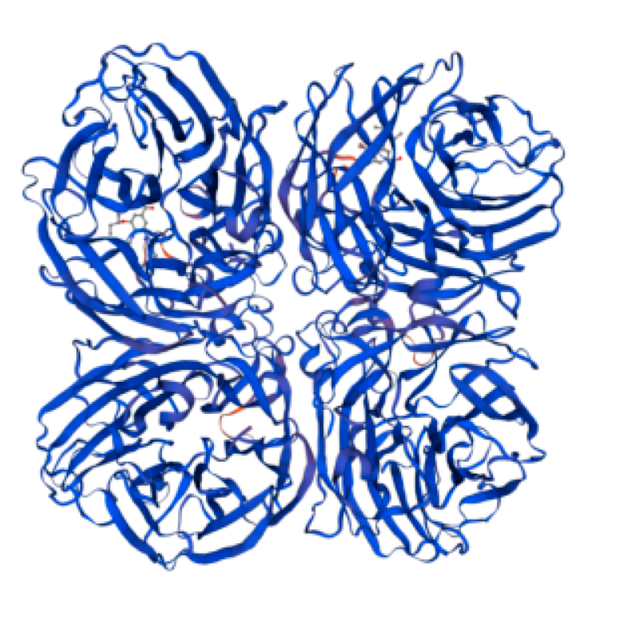
FIGURE: Structure prediction of rNA protein using SWISS-MODEL.. Vaccines (Basel). 2025;13(8):783. doi: 10.3390/vaccines13080783.

Reference
Zhang A, Tan B, Wang J, Zhang S. Recombinant Tetrameric Neuraminidase Subunit Vaccine Provides Protection Against Swine Influenza A Virus Infection in Pigs. Vaccines (Basel). 2025;13(8):783. doi: 10.3390/vaccines13080783.
Go to Vaccines